







BoA the LIVE in Osaka: A Masterclass in Live Vocals
by Hasan Beyaz
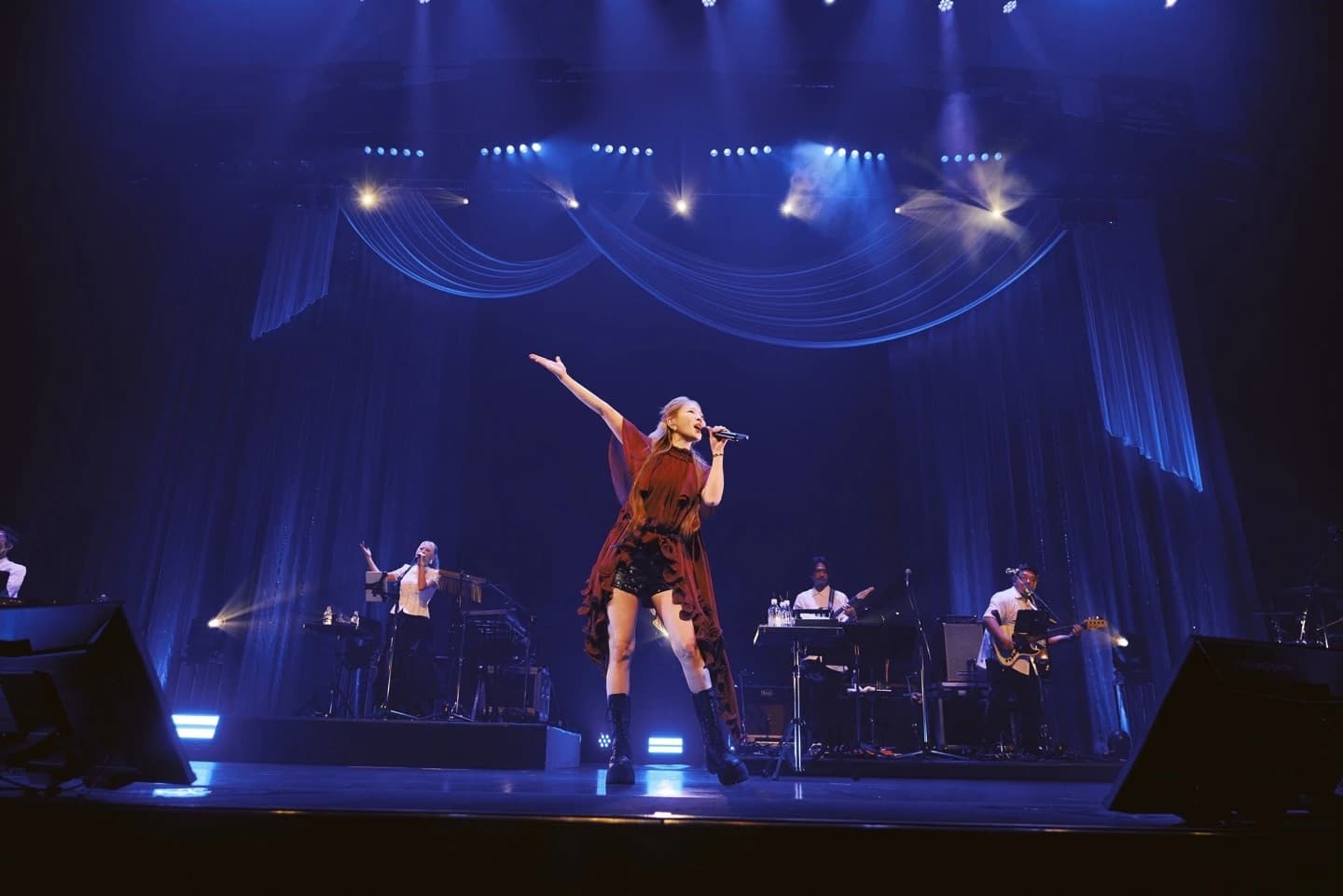
At Osaka’s Zepp NAMBA, a nearby coffee shop had already turned into an unofficial extension of the concert hall. Fans traded handmade goodies and speculated about the setlist, most of them dressed in the yellow that's historically marked BoA's fandom colour. It says something about what lay ahead: this was a crowd that already knew what it was in for.
This was the second of three dates across Japan, and the first time BoA has performed as an independent artist in collaboration with FG Entertainment and The Square ENM.
After a moody instrumental opening by the full band, BoA opened with “世界の片隅で,” a 2003 deep cut that's been performed live only a handful of times across her entire career – most of them clustered around her FIRST LIVE TOUR 2003〜VALENTI〜. It's not a song built for opening a concert. It's mellow and R&B-inflected, structured around control rather than impact – the kind of track that asks an audience to lean in rather than erupt. Opening on a song this rare, this vocally exposed, is a statement of intent: this show was never going to be about spectacle-as-default. It was going to be about what BoA's voice can still do, unaccompanied by choreography. The scaling belts in the chorus gave way to a fluttering falsetto in the outro, and the range on display in those first four minutes did more to set the tone than any amount of stage design could have.
From there, a “DO THE MOTION” (2005) / “Jazzclub” (2018) medley picked up the pace – a wonderfully unusual pairing by any means. “DO THE MOTION” – a signature hit – took on a slower, band-inflected style, before suddenly segueing into the upbeat rhythms of “Jazzclub.” Splicing them together, with “Jazzclub”'s scatting vocal moment delivered excellently by BoA, gave the segment a freshness; the sort of moment a filmed DVD can capture, but the room reacting in real time to a composition it didn't expect is something harder to document.
“make a secret” (2005) kept the momentum, a clear enough signal that the priority for the night was skill on display rather than crowd-pleasing default mode. Then came “soundscape,” a B-side that's barely been performed since its 2006 release and one that reinforced the same idea: this setlist was built for people who know BoA's catalogue deeply past the singles.
“Happy Birthday” (2008) and her “LA·LA·LA LOVE SONG” (2005) cover both landed warmly with the crowd, keeping the room in that same register of intimacy rather than pivoting to bombast. “Song With No Name ~名前のない歌~” (2004) followed as another vocal high point, with the acoustic guitar-driven ballad giving her voice room to do something technically demanding in a low-key setting.
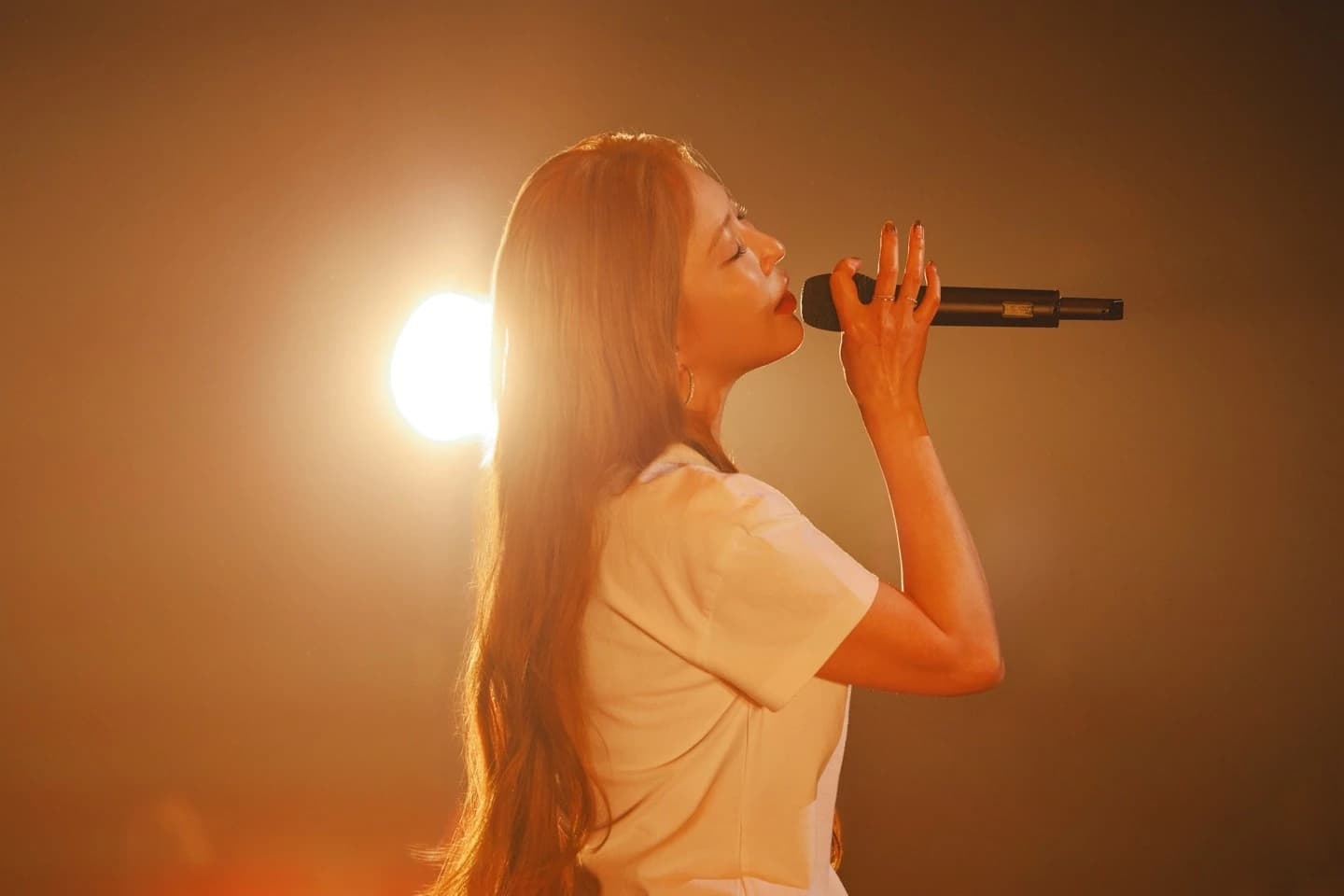
And then “Moon & Sunrise” (2003). If the show had a single peak, this was it. The song is one of her most vocally challenging tracks, moving between register extremes at a pace that leaves almost no room to recover – high notes into full belts, back and forth, with nothing to soften the transitions. Live, twenty-three years after it was originally released, BoA still vocally captures the magic of the song; her soaring ad libs that brush up against the whistle register reverberate through the silence of the room in a way that no recording can capture.
“Ain't No Hard Feelings,” her new single released this May, brought a different kind of energy; lighter, bouncier. It landed as one of the most purely energetic moments of the night. “七色の明日 ~brand new beat~” (2006) brought back flashes of her signature choreography, a rarity in a set otherwise built around vocal prowess. It's worth remembering, in a show this vocally focused, that BoA built her reputation as much on movement as on voice – she's spent more than two decades being talked about as one of the most accomplished dancers of her time, a performer whose choreography is still studied as much as her vocal runs are. Seeing that side of her surface for even one song was a reminder that the identity has range most artists never develop.
The finishing trilogy of “LISTEN TO MY HEART,” (2002) “VALENTI” (2002) and “QUINCY” (2005) ran almost as one continuous piece, trading the intimacy of the earlier set for outright momentum. A hit-filled closing segment worked as a compressed timeline of the artist she became before she'd even turned twenty: “LISTEN TO MY HEART”'s sleek simplicity, “VALENTI”'s pulsing pop groove, “QUINCY”'s horn-driven drive, each one a different register of the same pop instinct that turned her into a national star. None of it needed updating for 2026; the songs that made her an icon still hold up.
The encore was set off by a front-row fan conducting a fanchant – “BoA, B-O-A!” – with lightsticks, the chanting building until the live band stepped out before BoA arrived for “Only One” (2012). “キミのとなりで,” a refreshing ballad from 2006’s OUTGROW, closed the set the way it opened – not with a hit, but with a song that's rarely occupied a spot in her setlists. The chorus builds in layers rather than jumping straight to power, treating us to the power of her vocal abilities one final time.
Throughout, BoA’s rapport with the room did as much work as the songs themselves. She spoke between numbers with that natural ease which has kept fans magnetised to her beyond the hits, responding to shouted comments with wit and candour. "Did you call me, as a Queen?" she asked in English at one point during the encore, needling back at a comment from the crowd. It got the kind of cheer that only lands when the timing is genuinely spontaneous.
The setlist itself – “世界の片隅で,” “soundscape,” “Song With No Name ~名前のない歌~,” “Moon & Sunrise” – is not one defined by well-known singles anyone associates with BoA's public image. They're the tracks that rarely make the cut, and stacked together across one show, they build the argument that the hit-driven, dance-forward version of BoA most people know has never been the full story.
BoA the LIVE, as a series, turns twenty this year. What's remarkable about this run isn't that the format has survived that long. It's that the argument it's still making – that BoA is just as adept as a pure live vocalist as well as a dance machine – remains just as persuasive now as it presumably was in 2006. A deep-cuts setlist, built by an artist without much left to prove, made that case better than any anniversary retrospective could have.